I am amazed by how recently many people write about introvert like it’s a new human species. But I’m happy to see the “mystery” of this less-recognized personality trait has finally come to light.
Introversion is, however, nothing “mysterious” to me since I’m very much an introvert myself; and I believe that personality traits should not be divided by this simple dichotomy (well and so there is also a species called ambivert).
Everyone has both an extroverted side and an introverted side. But to make things simple and with the fact that I was an extreme case of introvert when I was younger, let’s assume people are divided into these two distinctive groups, and let me talk about how it was like for me to grow up as an introvert; how fighting against it had possibly led me to depression; and how I overcame it by learning to accept myself as what I am.
BACK TO THE TIME WHEN NO ONE TOOK INTROVERTS SERIOUSLY
Before introversion is being popularized or even glorified in recent discussions, introverts have had a hard time taking a stand in the social world. During my teenage, no one saw introversion as something worth discussing about. Being an introvert somehow meant you didn’t have a character at all.
The cool kids at school, the brilliant students with a bright future ahead, were usually the extroverts – they’re outgoing, outspoken, popular and likeable; they’re the leaders, they’re the winners in life; they got attention easily, they lit up the room; their personalities were shining.
If you’re the extreme opposite of the kind, people didn’t know exactly how to define you because you’re obscure – in a way that you easily disappeared into the background, dissolved into the wallpaper. There weren’t any interesting ways or words to describe you. No one was even interested in finding out what you really were, because there were nothing in there to be found.
You didn’t have a character at all.
I was a straight-A student in primary school. No one had a bad word to say about me because teachers liked this quiet and shy little girl who was attentive in class and never a trouble-maker, and I was also liked by my fellow classmates.
But in secondary school, everything changed. I had a hard time studying and making friends. Most teenagers want to be the cool kids (or to hang out with them), to be noticed, to stand out in the crowd. People who were popular at school were those smart kids who were extremely good at studying but not nerdy; those who were loud, sharp, outgoing, sociable – namely extroverts; or those who were good-looking – a.k.a. the hot dudes and chicks. I was none of these obviously, but I was just being me as much as the way I always had been. And it suddenly became a problem.
WHEN INTROVERSION WAS SEEN AS A PERSONALITY DEFECT
To adapt myself to the transition from the smartest kid to an underachiever was already quite a big issue. But what was more overwhelming was how people (teachers, classmates, and even my parents) saw me as an “introvert” – at that time this word had no positive meaning at all, but was largely seen as a problem to be corrected, or a flaw to be mended.
My bad grades drew my teachers’ and parents’ attention, so much as my lack of social skills and character (to their understanding). They couldn’t find a reason to explain my sudden drop in academic performance. My teachers talked to me and my parents about my problem of being too quiet, timid, reserved, and not being able to get along with the crowd – and that it adversely affected my social life, personal growth and thus my learning progress. They thought that I was too shy to ask questions even when I didn’t follow or understand the lessons.
That was bullshit. Why couldn’t I just be too dumb to catch up with the class? Why did it have anything to do with my character (or my lack-of-character)? And so when I made a great leap in my academic ranking on the third year, my teachers gave me this review on my report card – “Great achievement in academic result and character building” – like, of course, they’re interrelated. But I had done nothing to build my character whatsoever. I only studied so fucking hard and I talked no bullshit.
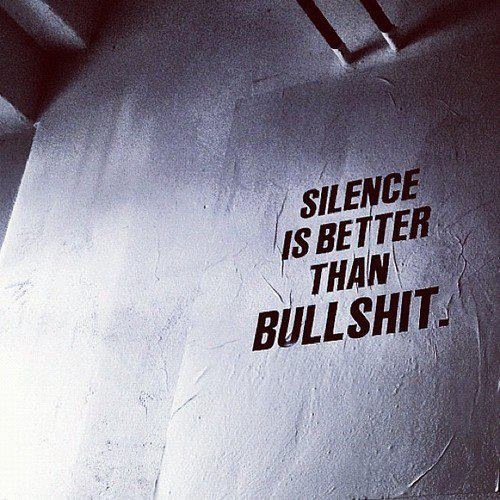
INTROVERSION WAS A PECULIARITY
Besides the way I was perceived by the adults I respected, there also came the thing that no typical adolescents are possibly immune to – peer pressure. It felt bad when I couldn’t blend in and befriend with the people who seemed like having so much fun with each other. I always sat alone during recess and lunch time. I had only a few people whom I liked to talk with – even though I would rather be having some alone time than socializing, I still felt isolated when being seen as “strange” and “weird”.
I did attract people’s attention in some ways, mainly because they found me so awkward and out of place. They might not understand how I could survive without talking, because they probably could not live if they had to shut up for a minute. When they talked to me, they were inevitably asking, “Why are you so quiet?”, “How can we get you to talk?”, “Are you dumb? Can you speak?”.
I knew some people actually meant well, while others simply teased me for fun. Some even described me as “autistic” – which was a clear ignorance and confusion of “introversion” and “austim”. That made me dwell on what was wrong about not liking to talk; why people had to pick on me being quiet, while I never asked anyone to shut the fuck up when I found them annoying talking too much.
But someone who doesn’t like to talk is always labelled as awkward; while someone who talks (even too much) is just being active. No one actually sees someone’s preference to be quiet, to be alone, to not to say whatever comes into their mind, as a natural inclination – and that they feel comfortable being this way. But more often, people see these as problems, as personality defects that need to be fixed. Quietness makes people uncomfortable. People fear someone who doesn’t open up but keep their thoughts and emotions hidden.
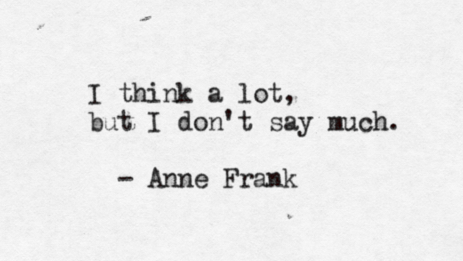
YOUR PERSONALITIES FADE WHEN YOU TRY TO FIT IN
Introversion is seldom seen as a positive trait or a personal strength. If you’re introvert, you have to open up, to improve your personality and build your character. If you want to succeed in life and in the social arena, you have to be an extrovert. This concept was so deeply rooted in my head. I grew up struggling against my introversion. I tried so hard to be outgoing and sociable, to make a lot of friends, even though I knew that I was fine with just a few friends whom I had much deeper and meaningful friendships with.
I didn’t want to be an introvert who seemed to vanish into the thin air – not being heard, not being seen, not being understood. I wanted to be visible, to be important, and to get attention. I didn’t even like my Chinese name because literally it means “gentle and quiet”. I engaged myself in social activities. I did what the peer did and I wanted to be just like them. I was building my character according to people’s blueprint for success and popularity – and that being an extrovert was always more advantageous and desirable than being an introvert.
I do not deny that I needed to improve my character. For all the years I’ve been working so hard on opening up myself, I have slowly built up my self-confidence which I lacked when I was younger. But bending myself from an introvert to an extrovert, and proving myself to be something I was not, only led to more self-denial and shrinking self-value.
I did a lot of things to “improve” and “prove” myself, I did them even though I was not happy doing them. Whatever people said or thought of me to be, I had to prove otherwise. I thought that was the only way to change people’s perception and stop the stereotyping. It was until later I learnt it the hard way that no matter how hard I tried to prove myself, I could not change or control people’s perception.
BUILDING UP A FALSE IMAGE DIDN’T GET ME ANYWHERE
My incorrigible urge to prove people wrong, to prove that “I am not what you think I am”, had led me to irrationally do things and present myself as what I wanted to be seen. I was creating an image that was actually not me. I fought so hard to be what I thought was desirable. I cared too much about how I was perceived, and I took offence at the slightest criticism. It seemed like I had a lot of dignity, but the reality was, I couldn’t even get hold of my self-value. It was just a fake image built on loose sand and could be crushed into pieces by just one small touch. I couldn’t really let people get close to me and find out I was not what I pretended to be.
I did not accept what I really was, and I thought that no one would either. I let love passed me by because I thought I didn’t deserve it. I despised myself for my flaws and didn’t realized that people who cared enough to see what I really was, loved me also for my flaws. I filled up the void by doing a lot of things that I didn’t love doing, never accepted the fact that as an introvert, the void, personal space and tranquility were exactly what I needed.
I tried to change myself for better, but instead of growing, I was decaying. I was not happy being me, and eventually it developed into a certain degree of depression, which resulted in a prolonged period of depressive or even self-destructive behaviours when I was around 18 and 19. I didn’t picture my days at the peak of my youth to be dark and miserable like that. It went on for a long while until finally I woke up and learnt that it was a joke to try framing people’s perception, when you’re only projecting a false image that didn’t stand on its own.
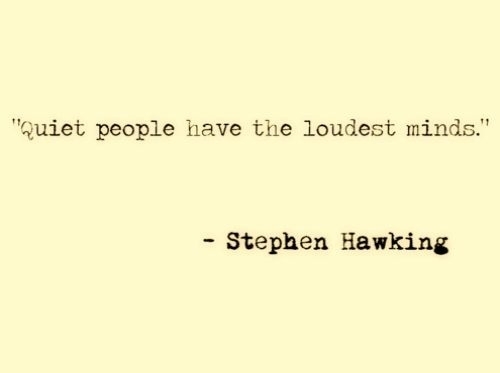
YOU WILL BE SEEN BY THE RIGHT PEOPLE WHEN YOU’RE COMFORTABLE IN BEING YOU
The only way to get people’s respect is to respect yourself first. And one of the most crucial ways to happiness is self-acceptance. And so I crushed that false image I created and started being me, and I learnt, little by little, to care less about how people perceived me. By doing this, you will be amazed when you meet people who are able to see you through; and you will develop much deeper relationships and connections with these people, who may see more in you than you do yourself.
One of the examples was two years later during my first job as a journalist, I had this colleague whom I worked with for only a few months. One day after we had lunch with the rest of our team (and obviously I remained silent for most of the time), she looked me in the eyes and said in a very serious tone, “I could see that you were thinking a lot of things back there, but you just didn’t choose to talk. It’s not like your mind is empty. You’re always thinking. You have complicated thoughts but you’d rather keep them to yourself. I can see that.”
I was speechless. She was the first person saying these to me instead of asking me, “How can I get you to talk?”. She knew no one could actually get me to talk if I didn’t feel the need to, and she didn’t need my explanation because she just knew what’s going on in my head. We remain friends until now and she is my most trusted confidant. I bet she may be annoyed by how much I’ve been talking to her since then.
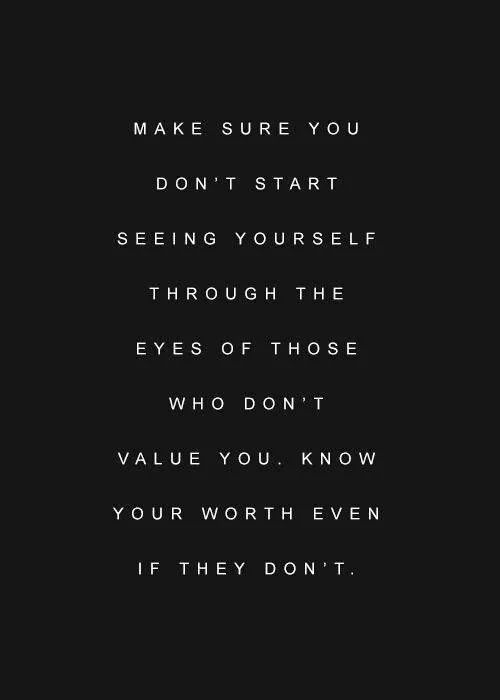
SELF-ACCEPTANCE IS THE FIRST STEP FOR PERSONAL GROWTH
There is nothing wrong trying to improve yourself, or even change yourself if you see some parts of your personalities hindering your personal growth. But remember, being introvert doesn’t stop you from growing, denying what you are does. I didn’t really start to grow until the day I learnt to accept myself, sweeping away the loose sand and taking root in the footstone of my real personalities.
Never change yourself just because people don’t understand or like you. Don’t try to be understood or liked by everyone, but notice and acknowledge the very few who do see your personalities shine through.
“I am what you think I am”, and the people who care enough would see you exactly as how you see yourself, or even more, but only better, and love you for what you really are.
P.S. Quotes on featured image comes from Paulo Coelho’s “Manuscript Found In Accra”.


I love this, jane. I am an introvert as well and so much of this post spoke to me.
LikeLike
Debbie, thanks for reading such a long article… just want to say hello to all the other introverts out there:)
LikeLike
Reblogged this on David Snape and Friends.
LikeLiked by 1 person
Thanks so much, David:)
LikeLiked by 1 person
That’s alright, you are doing a great job 😃
LikeLike
Reblogged this on crowdCONNX.
LikeLiked by 1 person
You are very much a spiritual being, first and foremost. Many who chatter, endlessly, are merely filling up space. By your careful observation, you know who they are. I am an ambivert, and many hours may pass before i speak my mind, or I contribute to the general discourse, as I see fit. Be at peace with yourself. 🙂
LikeLiked by 1 person